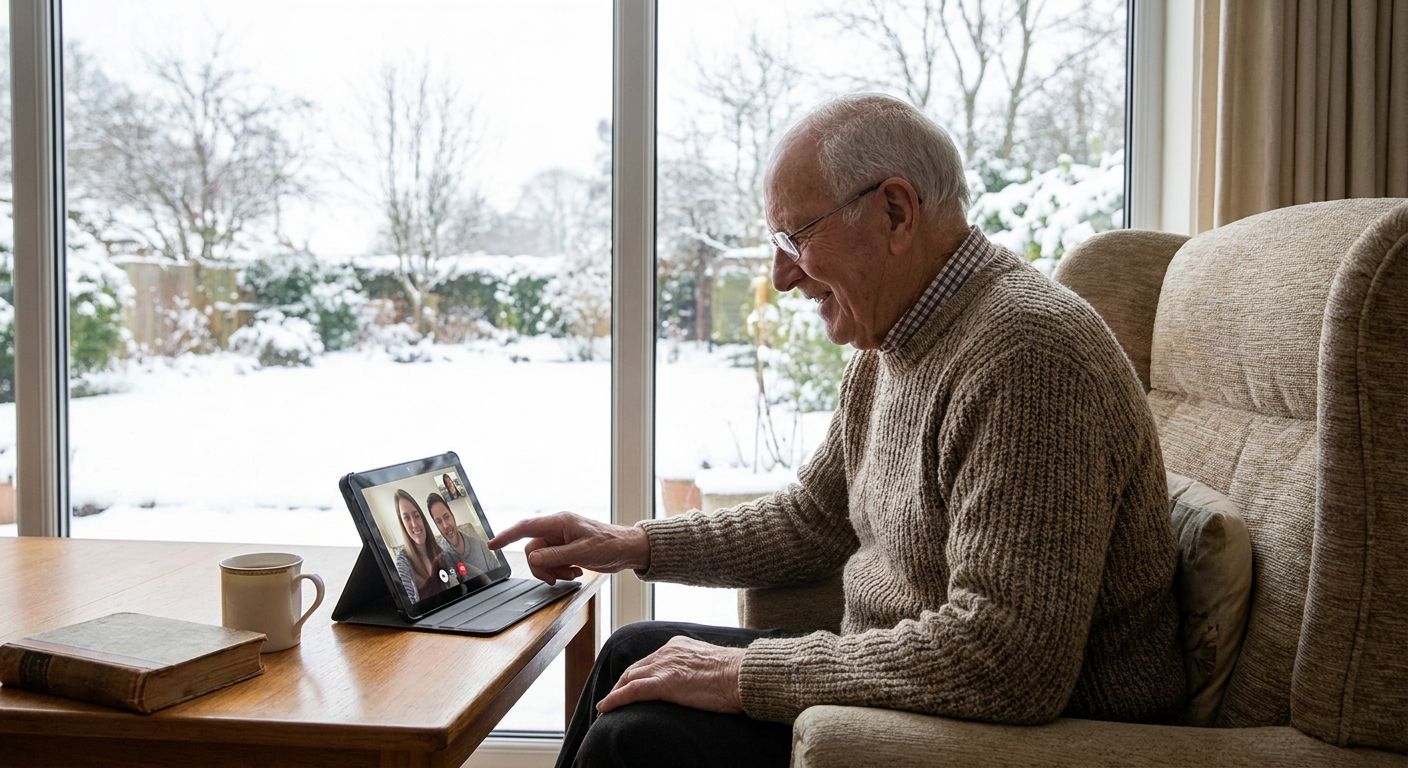
Winter isolation for an elderly parent is the stretch between November and February when shorter days, icy sidewalks, and fewer visitors combine to cut off daily human contact — and a companion device for elderly parents in winter closes that gap with a voice, not a screen, that checks in every day regardless of weather.
- Ato is a $179 screen-free voice companion built for elderly parents who lose contact during winter isolation.
- Daily check-in calls from adult children help, but they can't cover the hours a snowed-in parent spends alone.
- Winter cuts senior social contact more than any other season — shorter daylight and icy roads keep visitors away.
- A voice-first companion device for elderly parents in winter adds reminders, conversation, and a caregiver notification loop without an app to learn.
Why winter isolation hits elderly parents harder
Winter changes the math on isolation. Daylight shrinks to under 10 hours in most of the US by late December, in-person visits from adult children drop when roads ice over, and community centers and senior programs often cut hours or close during storms. A parent who saw a neighbor or ran an errand three times a week in summer might go days without leaving the house in January.
That's the segment this guide is for: an aging parent who lives alone or with a spouse, is generally independent, but loses their usual social contact for weeks at a stretch once winter sets in. Their needs are different from someone recovering from a fall or managing memory loss — the primary risk here is loneliness and disrupted routine, not a medical emergency. A check-in service for elderly parents living alone matters more in winter because the informal check-ins — a neighbor waving from the driveway, a walk to the mailbox where someone says hello — mostly stop.
Recognize the winter isolation signs first
Before adding any device, know what you're watching for. Winter isolation doesn't always look like sadness — it often looks like withdrawal from routine.
- Fewer outgoing calls or texts than usual, even to close friends
- Skipped meals or irregular eating tied to not wanting to cook "just for one"
- Sleeping later into the day as daylight hours shrink
- Complaints about being "stuck inside" without a plan to change it
- Declining invitations they'd normally accept
- Increased TV or radio use as a substitute for conversation
Set up daily check-ins that don't depend on someone driving over
The single most protective habit against winter isolation is a predictable daily touchpoint that doesn't require anyone to leave their house in bad weather.
- Schedule a fixed daily phone call time, even if it's five minutes
- Ask a nearby neighbor to text a photo of the driveway or sidewalk after snowfall
- Use a shared family group chat so multiple people share the check-in load
- Set up a voice companion device that greets your parent each morning and flags if they haven't spoken to it by a certain hour
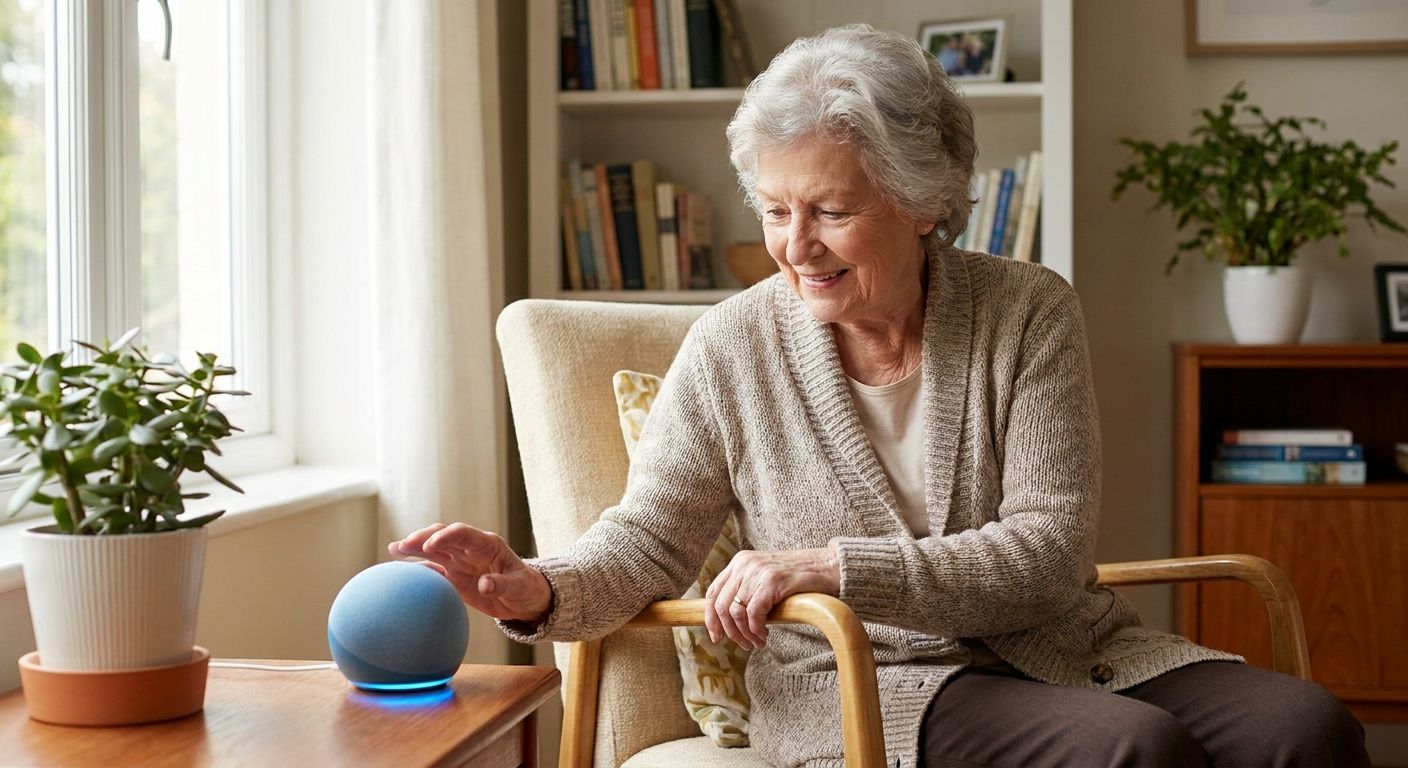
This is where a screen-free option earns its place. Ato answers with a plugged-in voice, no app, no login, and no screen to squint at — a parent picks up the conversation the same way they'd answer a phone, and a missed check-in can quietly notify the family.
Build a routine anchor for shorter winter days
Short days scramble sleep and meal schedules fast. A fixed anchor point — same wake-up conversation, same reminder to eat lunch — keeps the day from dissolving into hours of TV.
- Set one recurring reminder for a meal, a walk to the window for daylight, or a phone call
- Keep curtains open during daylight hours to regulate the body's internal clock
- Pair a morning routine with a specific, repeatable question ("what's the plan today?")
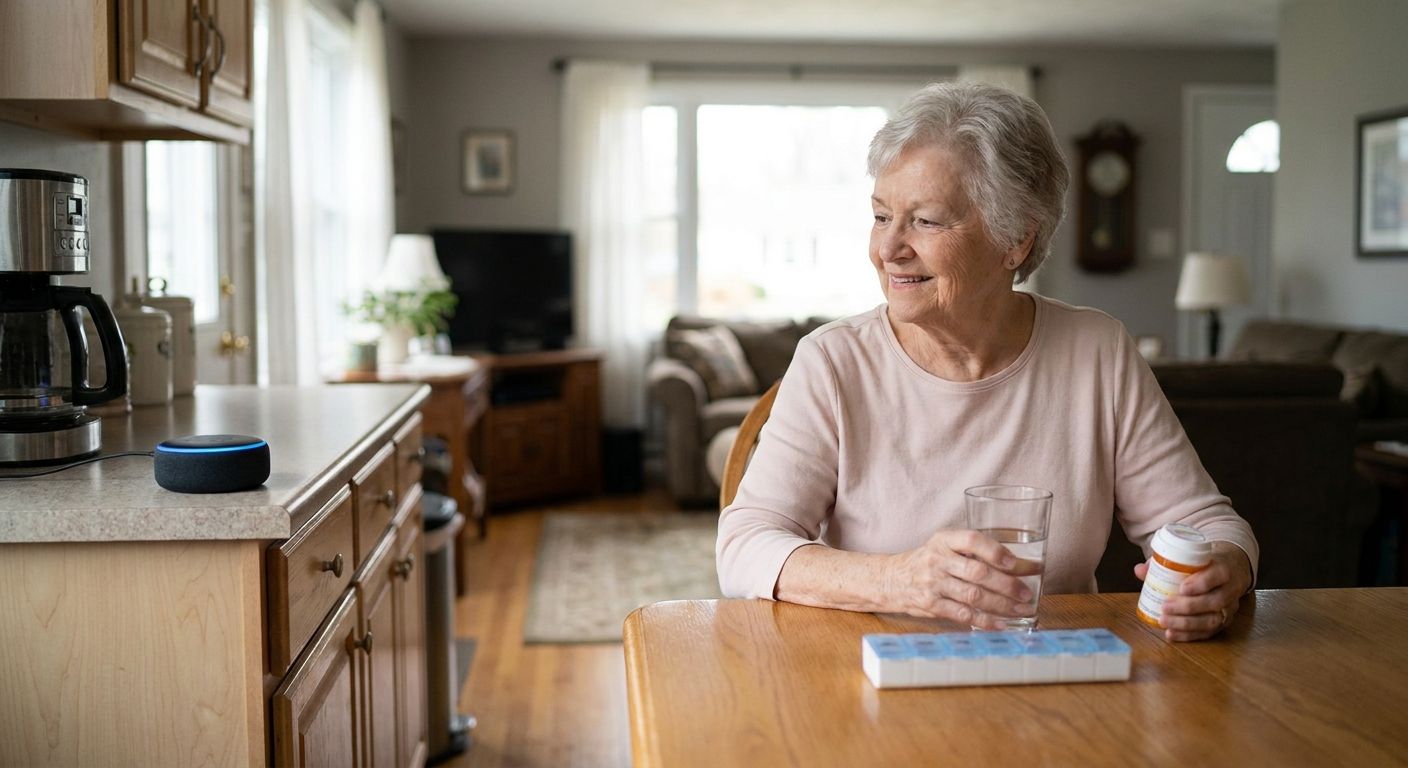
- Use a voice companion's daily reminders for medication, meals, or a scheduled call so the day has structure even with no visitors
Layer in reminders for medication and safety during icy weather
Winter adds real physical risk — ice on steps, delayed pharmacy runs, missed doses when a routine breaks. Reminders matter more, not less, when the weather is bad.
- Set medication reminders tied to a consistent time of day, not "after breakfast"
- Confirm heating systems and carbon monoxide detectors before the first freeze
- Keep a list of who to call if a storm knocks out power
- Ask a companion device to prompt a daily safety check ("did you take your medication today?") so nothing depends on memory alone
Add social touchpoints beyond family calls
Family can't be the only source of conversation — that's too much weight on too few people, especially once holidays end and visits taper off. A voice-first companion for seniors who don't use smartphones fills real conversational gaps between family calls, not as a replacement for people but as a bridge.
- Encourage a weekly call with a friend, sibling, or old coworker, scheduled in advance
- Look into a local senior center's winter phone-check program if one exists
- Ask a place of worship or community group about a winter buddy system
- Use a companion device for casual daily conversation between the calls that do happen
Loop caregivers in without adding more work for them
Adult children juggling their own households don't have bandwidth for constant manual check-ins through a snowy winter. The goal is visibility without a second full-time job.
- Set up a shared notification when your parent hasn't checked in by a set hour
- Rotate the calling schedule among siblings so no one person carries it alone
- Ask about local grocery or pharmacy delivery for storm days
- Use a companion device that sends a caregiver notification automatically, so no one has to remember to ask "did you talk to Mom today?"
Watch for signs that go beyond isolation
Winter isolation can tip into seasonal depression, and that's a different conversation than a lonely afternoon.
- Persistent low mood lasting more than two weeks
- Loss of interest in things they normally enjoy, even indoors
- Comments about feeling like a burden
- Noticeable change in appetite or sleep beyond "it's dark earlier"
If any of these show up, involve a doctor — a companion device supports daily connection, it doesn't diagnose or treat depression.
Comparing winter check-in options for elderly parents
| Option | Best for | Starting cost | Key limitation |
|---|---|---|---|
| Scheduled family phone calls | Families who can commit to a fixed daily time | No direct cost, just family time | Depends entirely on someone remembering, every single day |
| In-person neighbor check-ins | Parents with nearby neighbors willing to help | No direct cost | Unreliable in bad weather, awkward to formalize |
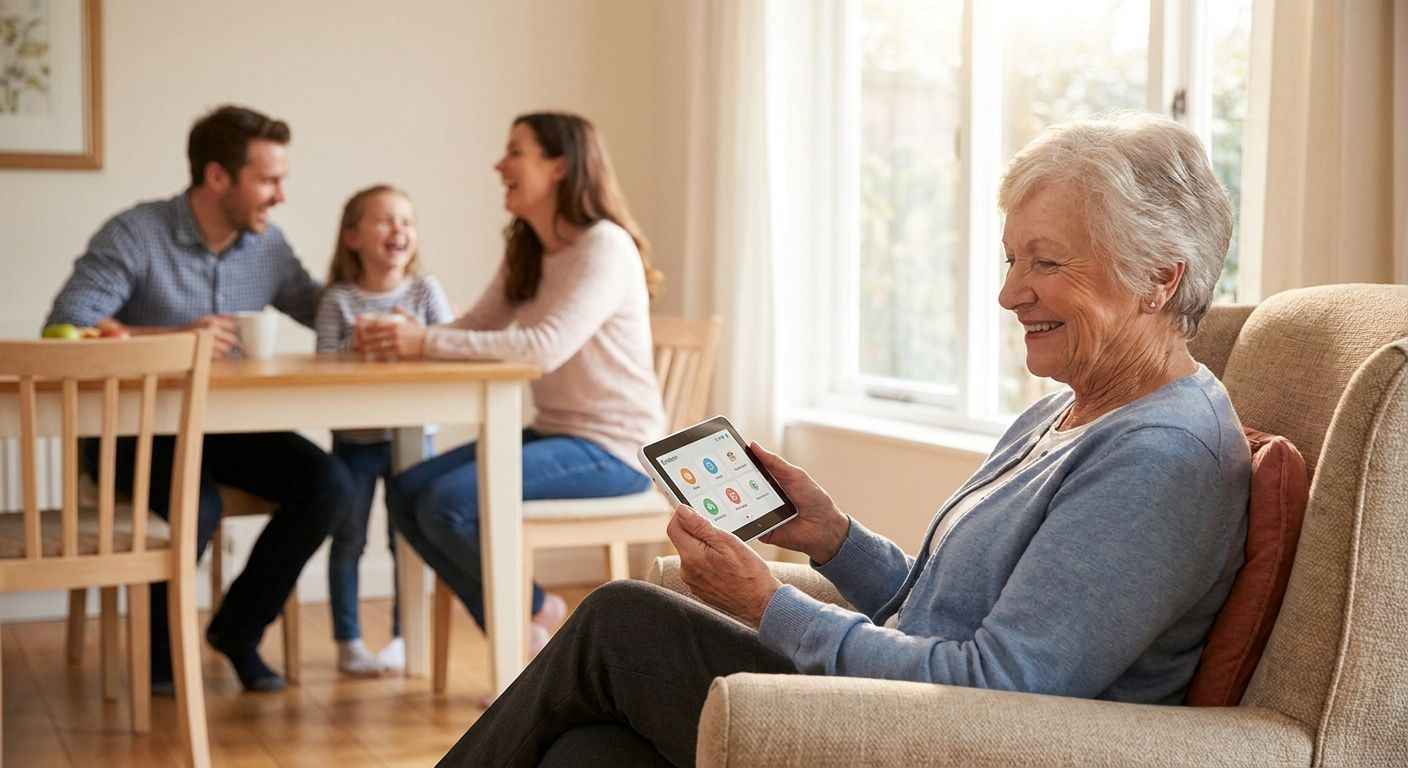
| Video calling apps (tablet-based) | Tech-comfortable seniors with good eyesight and steady hands | Varies by device and plan | Screens, logins, and app updates frustrate many seniors 75+ |
| Local senior center wellness calls | Seniors already enrolled in a local program | Often free through the program | Closes or reduces hours during storms and holidays |
| Ato voice companion | Seniors who want daily conversation and reminders without a screen | $179 | Doesn't replace in-person visits or medical monitoring |
Verdict: for a parent who loses regular contact once winter sets in, Ato is the option that keeps working on the days no one can drive over — it doesn't require a screen, a password, or good eyesight, just a plug and a conversation.
Give a parent daily conversation this winter
Screen-free, voice-first companion for $179 — plug in and talk.
Common mistakes families make during winter isolation
- Assuming holiday visits cover the whole season. A busy December visit doesn't offset six weeks of January and February with no one around.
- Relying on one sibling for all check-ins. Winter storms and travel make single points of failure fail exactly when they matter most.
- Waiting for a crisis before adding structure. Reminders and routines work best set up before the first hard freeze, not after a missed appointment.
- Choosing a tablet because it "does more." More features mean more login screens and more frustration for a parent who just wants to talk to someone.
- Treating loneliness as untreatable. A predictable daily touchpoint — even five minutes — measurably changes how isolated a winter feels.
FAQ
What's the best companion device for elderly parents in winter?
A screen-free, voice-first device like Ato works best for winter isolation because it requires no app, login, or good eyesight — a parent just plugs it in and talks, and it can check in daily and notify family if something's off.
Is a voice companion better than a video calling tablet for seniors?
For seniors 75 and older or those uncomfortable with technology, a voice companion is generally easier because there's no screen to navigate or app to update. Tablets suit tech-comfortable seniors who already video call regularly.
How much does a senior companion device cost in 2026?
Ato is priced at $179. Costs for other options vary widely depending on the service, ranging from free family phone calls to paid monitoring subscriptions.
How do I know if my elderly parent is isolated in winter, not just quiet?
Watch for fewer outgoing calls, skipped meals, later sleep schedules, and declined invitations they'd normally accept. If these last more than two weeks alongside low mood, involve a doctor.
Can a companion device replace in-person visits during winter?
No. A companion device adds daily conversation and reminders between visits, it doesn't replace physical presence, medical care, or the value of an in-person visit.
Does a voice companion device work for a parent who doesn't use a smartphone?
Yes. Ato is built specifically for seniors who don't use smartphones — it needs no app, account, or screen, just a power outlet and normal conversation.
What should adult children do first for winter isolation?
Set a fixed daily check-in time before the first hard freeze, not after a problem shows up. Rotate the responsibility among siblings so no single person carries it through the whole season.
Does winter really increase loneliness in older adults?
Shorter daylight hours, icy roads limiting visits, and reduced community program hours combine to cut off a senior's usual social contact points, which is why winter is consistently the hardest season for isolation.
One last thing
The families who handle winter isolation best don't wait for the first snowstorm to build a plan — they set the daily check-in habit in October, before anyone's routine has broken. A parent who's already used to a daily voice conversation in the fall barely notices when the weather turns; a parent who gets a device handed to them mid-January during a crisis takes longer to adopt it. Set the habit before it's needed, and 2026's winter becomes a season you manage instead of one you react to.