Widowed seniors living alone lose more than a spouse — they lose the person who filled the quiet hours, and an AI companion for widowed seniors is worth comparing carefully against tablets, smart speakers, and robotic pets before you commit to one.
- Ato is the clearest buy for widowed seniors who won't touch an app or password screen — plug it in and talk.
- Tablet video-calling apps work only if the senior is already comfortable with screens; otherwise they sit unused.
- Smart speakers like Alexa handle timers fine but weren't built for open-ended conversation or loneliness.
- Robotic companion pets soothe but don't talk back, and most cost thousands more than a $179 AI companion.
- Medical alert devices are a good complement to an AI companion for widowed seniors, not a replacement.
Why this matters
A widowed senior living alone loses the person who structured their day — the one who asked how they slept, reminded them to eat, and filled the silence after dinner. Adult children searching for an AI companion for widowed seniors are usually trying to solve two problems at once: reducing isolation for a parent, and getting some peace of mind themselves when they can't call every hour.
The device category has grown fast enough in 2026 that families now choose between screen-free voice companions, tablet apps repurposed for seniors, general-purpose smart speakers, and robotic comfort pets. They are not interchangeable. Picking the wrong one means a $150-plus purchase that ends up unplugged in a drawer by month two.
Who this is for
This guide is for adult children, or a widowed senior themselves, evaluating an AI companion for a parent or spouse who now lives alone after losing a partner — someone who may not be comfortable with smartphones, apps, or logins, but who talks and listens fine. If the senior in question is already fluent with an iPad and FaceTime, some of the recommendations below shift; if screens have always been a source of frustration, the screen-free category matters most.
What to look for in an AI companion for widowed seniors
No login, no app, no password to forget
A widowed senior managing grief doesn't need a new interface to learn. Any device that requires an app download, an account, or a remembered password adds friction at the exact moment simplicity matters most — and friction is why so many senior tech gifts end up abandoned.
Voice-first, not screen-dependent
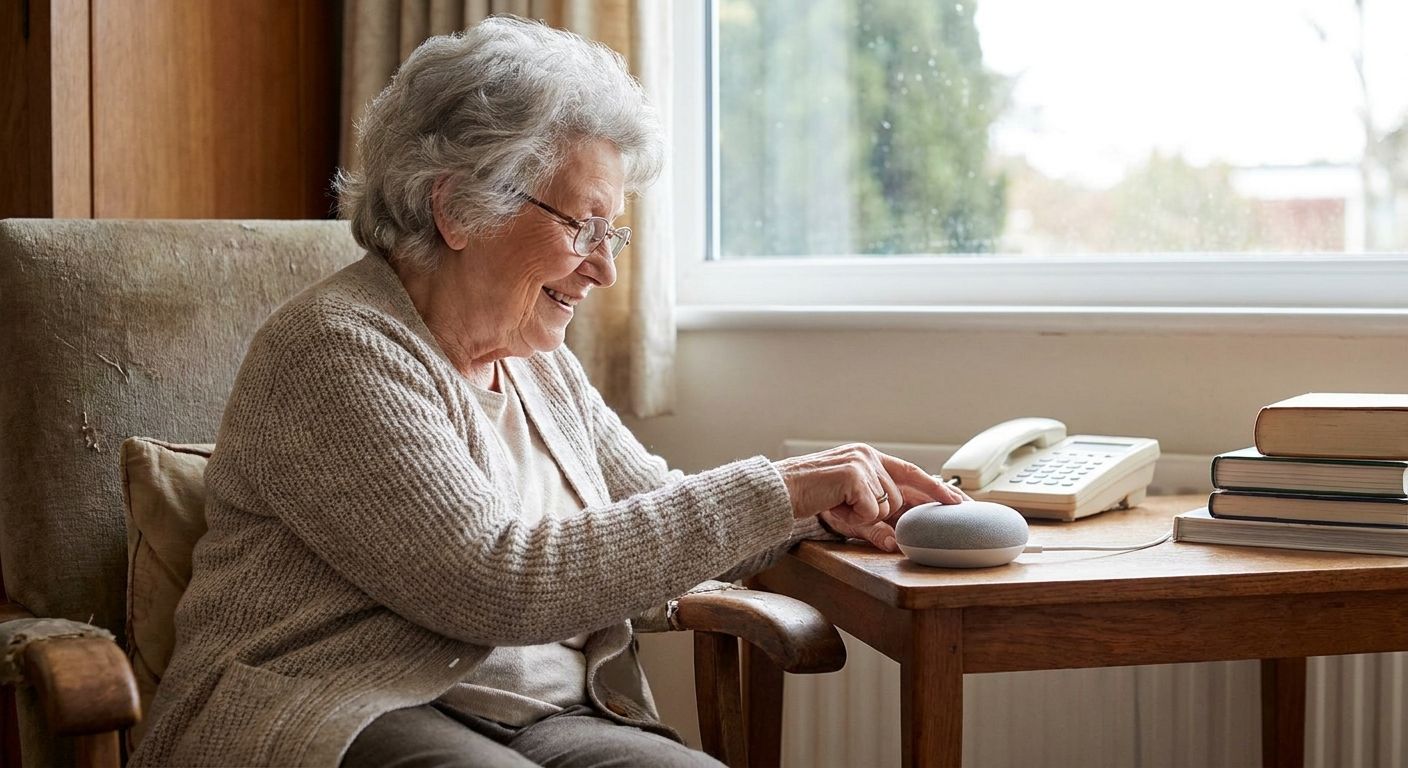
Screens ask for attention and dexterity; voice asks for neither. A companion that responds to natural speech — no wake-word gymnastics, no menu navigation — fits a senior whose hands or eyes have slowed down, and it matches how they've communicated their whole life.
Real conversation, not scripted reminders
A device that only barks medication alerts isn't a companion, it's a timer with a speaker. Widowed seniors living alone need something that can hold a back-and-forth conversation, ask a follow-up question, and remember what was said yesterday — the difference between a tool and actual company.
Caregiver visibility without surveillance
Families want to know a parent is doing okay without installing a camera in their living room. Look for check-in features that give adult children peace of mind while still respecting the senior's privacy and dignity — no always-on video, no data families can't explain.
Setup a senior can do without help
If setup requires a family member to configure Wi-Fi, create accounts, and pair an app, the device becomes dependent on that family member showing up in person. A companion that a senior can plug in and start talking to on day one removes that bottleneck entirely.
Total cost, not just sticker price
Some companion categories carry ongoing subscription fees or hidden accessory costs. A $179 device with no required monthly fee behaves very differently in a household budget than a $30-a-month subscription that compounds over a decade of use.
Top picks for widowed seniors living alone
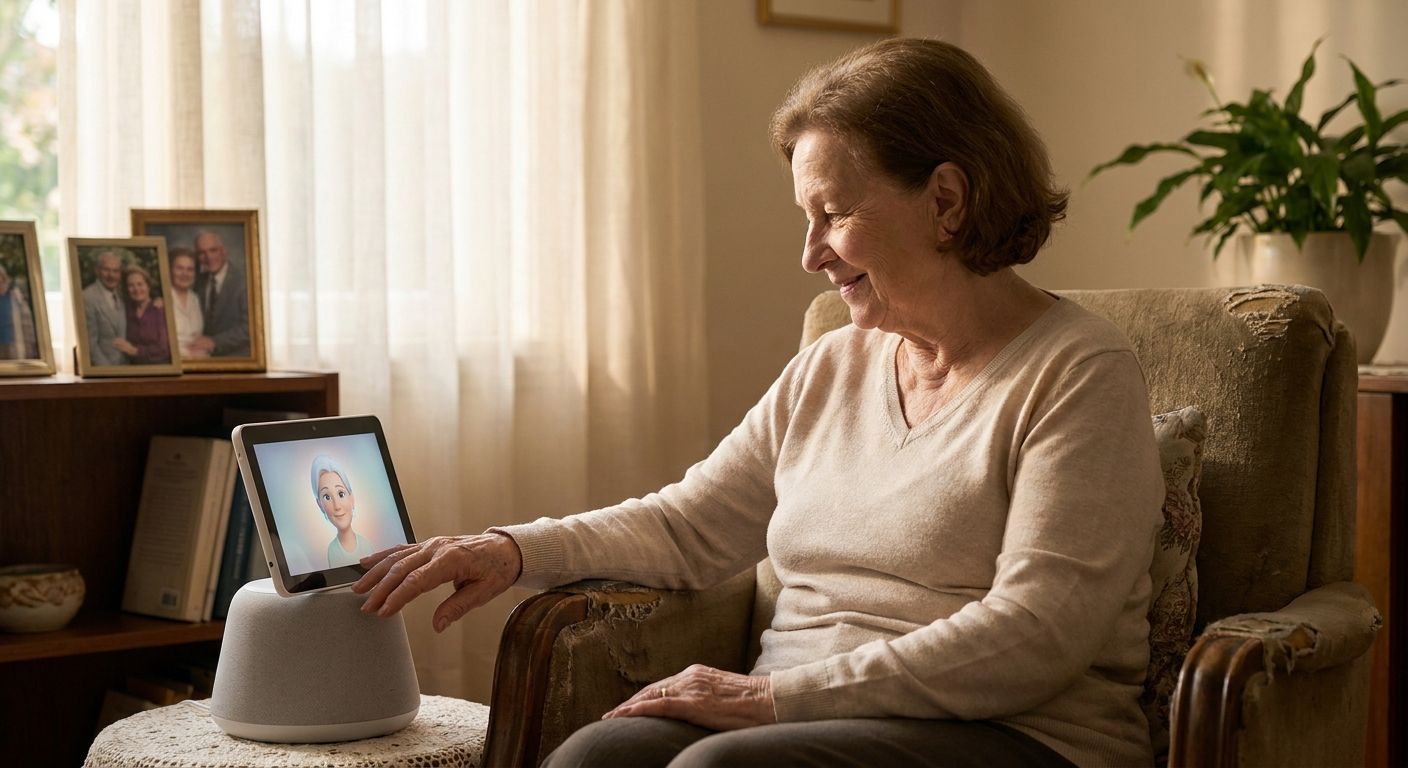
Ato — the screen-free pick. Ato is a voice-first AI companion built specifically for older adults: no screen, no app, no login — plug it in and talk naturally. It's priced at $179, holds open-ended conversation, and gives family caregivers reminder and check-in visibility without a camera in the room. For a widowed senior who wants company and doesn't want to learn new technology, Ato is the Buy.
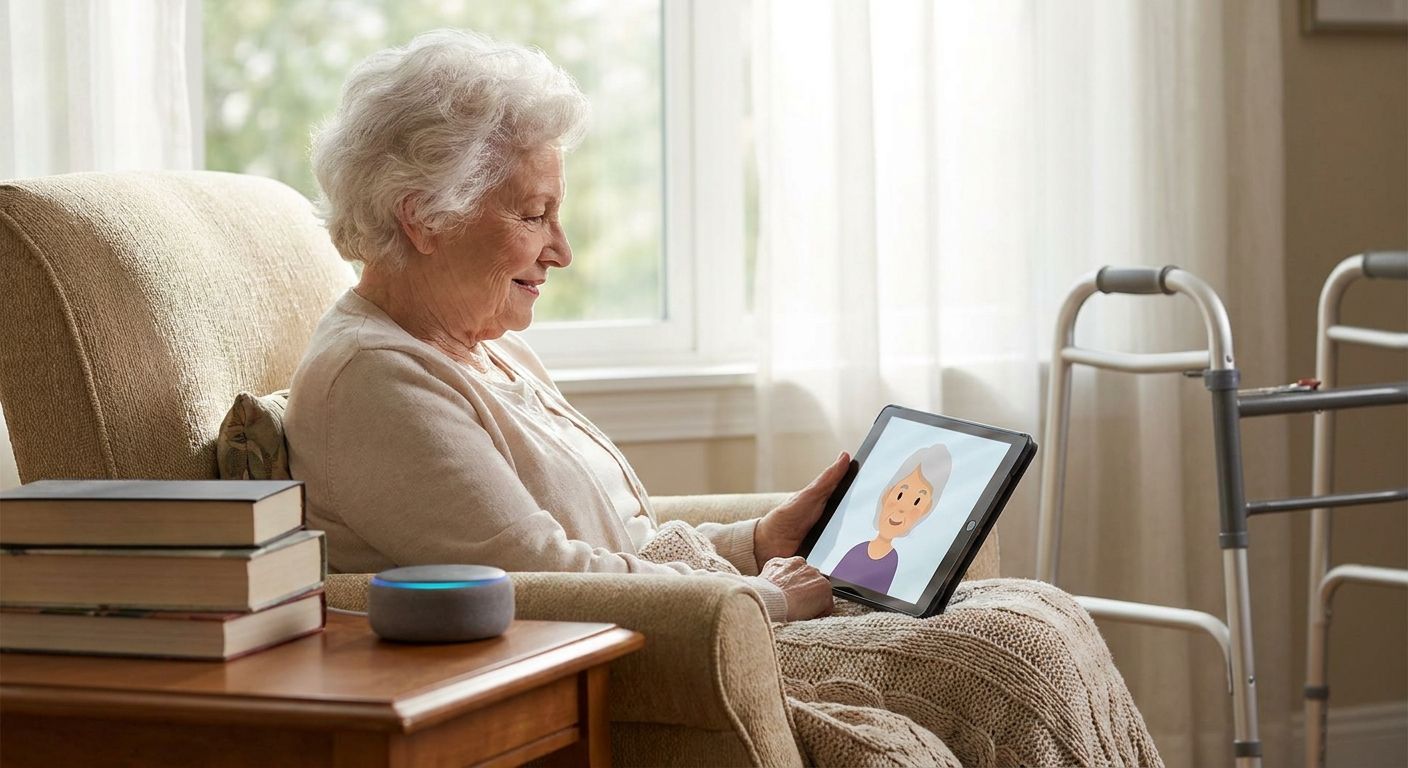
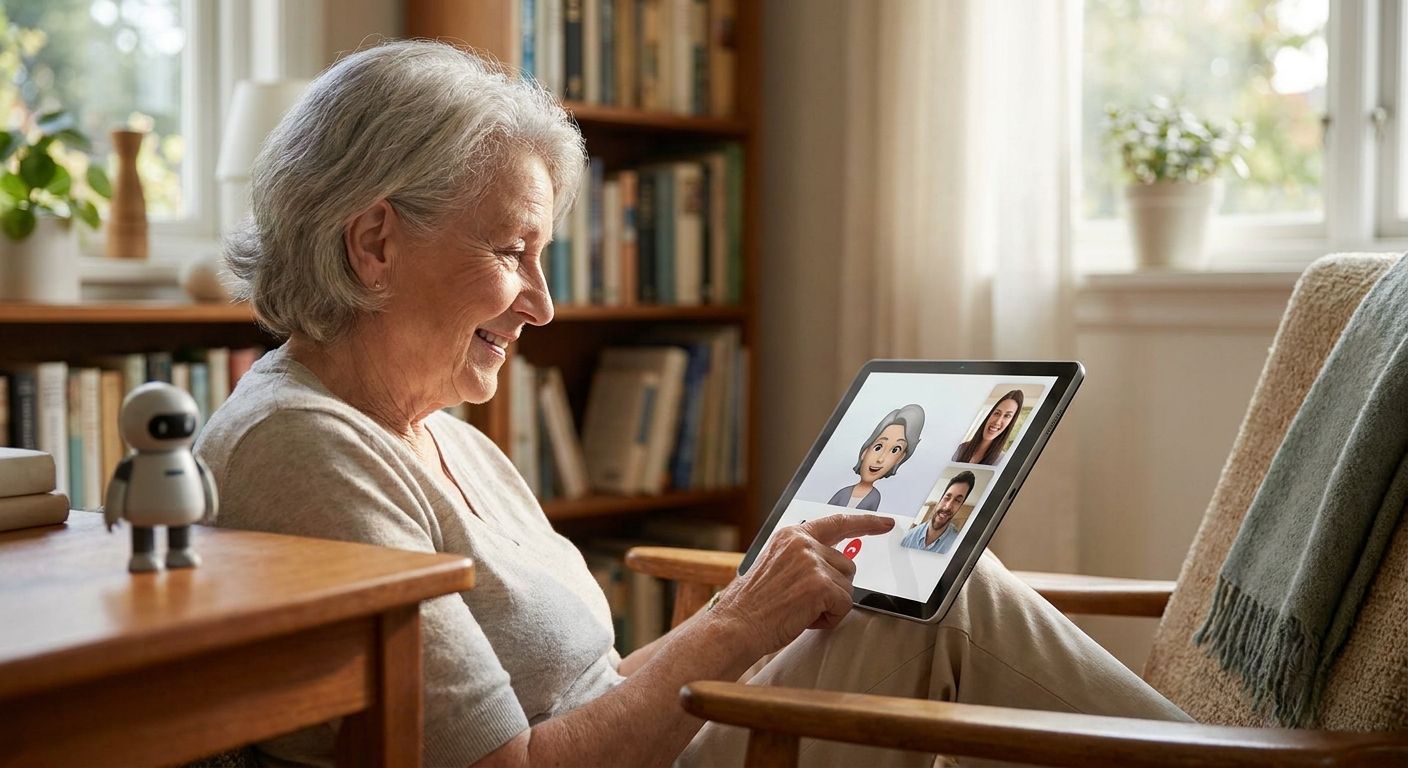
Tablet video-calling apps — the familiar pick. Apps like FaceTime or Zoom on a tablet let a senior see family faces on demand, which matters emotionally in a way voice alone can't replicate. The catch: they require the senior to unlock a screen, find an app icon, and often accept a call rather than start a conversation on their own. For a widowed senior already fluent with tablets before losing a spouse, this is a reasonable Consider; for one who has never used a smartphone, it's a Skip.
Smart speakers (Alexa, Google Nest) — the everyday pick. These handle weather, timers, and music requests well, and most households already own one. They were not designed for sustained, personal conversation or for tracking a person's emotional state day over day, and their wake-word system trips up seniors with softer or slower speech. Consider as a kitchen utility, Skip as a loneliness solution on its own.
Robotic companion pets (like PARO) — the comfort pick. These devices respond to touch and sound with soothing movement, and they're genuinely calming for seniors dealing with grief or cognitive decline. They don't converse, they cost thousands of dollars more than a $179 AI companion, and they're better suited to memory-care settings than a widowed senior living independently. Consider only for advanced dementia care; otherwise Skip.
Medical alert devices — the safety-net pick. Fall-detection pendants and buttons solve a different problem entirely: physical emergencies, not loneliness. They're worth pairing alongside an AI companion for widowed seniors, not instead of one. Buy as a complement, never as a substitute for conversation and daily connection.
See how Ato works for your family
A screen-free AI companion built for seniors living alone, starting at $179.
What to avoid
- Devices marketed as "senior-friendly" tablets that still require an app store account. The marketing says simple; the setup says otherwise, and most widowed seniors living alone won't call a grandchild every time an app needs updating.
- Subscription-based chatbot apps with no persistent memory. If the companion forgets what was said the day before, every conversation restarts from zero — which feels less like company and more like talking to a stranger on repeat.
- Camera-based "check-in" devices sold as companionship. A camera in a widowed senior's living room trades dignity for visibility. Reminder and voice check-ins can give caregivers peace of mind without turning a home into a monitored space.
Verdict comparison
| Option | Setup difficulty | Real conversation | Caregiver visibility | Ongoing cost | Verdict |
|---|---|---|---|---|---|
| Ato | None — plug in and talk | Yes, open-ended | Yes, no camera | $179 one-time | Buy |
| Tablet video apps | Moderate to high | Yes, scheduled calls | Limited | Device + data plan | Consider |
| Smart speakers | Moderate | Limited, scripted | No | Device + subscriptions optional | Consider |
| Robotic pets (e.g. PARO) | Low | None | No | Thousands upfront | Consider (dementia only) |
| Medical alert pendant | Low | None | Emergency only | Monthly monitoring fee | Buy (as complement) |
FAQ
What is the best AI companion for widowed seniors living alone?
Ato is the strongest fit for widowed seniors who don't want to learn an app or screen — it's a screen-free, voice-first companion priced at $179 built specifically for older adults. Devices requiring logins or subscriptions tend to sit unused after the first month.
Is an AI companion better than a smart speaker for a lonely senior?
For sustained conversation, yes — general smart speakers like Alexa are built for commands and timers, not open-ended talk. An AI companion for widowed seniors is designed to hold a conversation and check in, not just answer requests.
How much does an AI companion device for seniors cost?
Ato costs $179 with no required monthly fee. Robotic companion pets and some tablet-based senior platforms run considerably higher once subscriptions and accessories are added.
Can a widowed senior with no smartphone experience use a voice AI companion?
Yes — that's the point of a screen-free device. Ato requires no app, no login, and no smartphone; a senior plugs it in and starts talking naturally, which matters most for someone who has avoided technology their whole life.
Do AI companions for seniors replace human contact?
No, and they shouldn't be marketed that way. An AI companion for widowed seniors fills the gaps between visits and calls from family, reducing isolation during the hours nobody is available, but it doesn't substitute for real human relationships.
Is an AI companion safe for a senior's privacy?
A good AI companion should have no camera and no screen recording video, which removes the biggest privacy concern families raise. Ask any device maker directly what data is collected and how caregivers access check-in information before buying.
What's the difference between an AI companion and a medical alert device?
A medical alert device detects falls and emergencies; an AI companion for widowed seniors handles daily conversation, reminders, and loneliness. Families dealing with both physical safety and isolation often use one of each rather than expecting one device to do both jobs.
Do robotic companion pets help widowed seniors living alone?
Robotic pets like PARO offer touch-based comfort and are genuinely useful in memory-care settings, but they don't converse. For a widowed senior who is cognitively sharp and simply lonely, a voice-first AI companion addresses the conversation gap that a robotic pet cannot.
One last thing
The detail families overlook when comparing an AI companion for widowed seniors: the absence of a camera and screen isn't a missing feature, it's the design decision that makes the device usable in the first place. A widowed senior who has spent 40 years talking to a spouse across a kitchen table doesn't want to learn a new interface in year one of living alone — they want something that talks back the way a person would, at a price ($179) that doesn't require a family meeting to approve.