Seniors living in multigenerational households often get the least one-on-one attention of anyone in a full house, and a screen-free companion device closes that gap without adding one more login for anyone to remember. The mismatch here isn't loneliness from an empty house — it's the quieter kind, where a grandparent shares a roof with three generations but still spends most of the day waiting for someone to have five free minutes.
- Ato is the strongest companion device for multigenerational households at $179, because it needs no app, no login, and no shared family phone.
- Free tools like a shared family calendar or group text solve scheduling, but they don't solve the daily conversation gap.
- Wearable medical alert buttons cover emergencies, not company — households need both, not one instead of the other.
- The most common mistake: assuming a crowded house means an engaged senior. Presence in the home is not the same as attention.
Why a companion device matters for multigenerational households
A house with three generations under one roof runs on competing schedules: school pickups, work shifts, toddler naps, and an aging parent's routine squeezed into whatever's left. The senior in that house is rarely alone, but they're frequently unattended — everyone's home, nobody's free.
This is a different problem than the one solved by check-in calls or video chat. Those tools assume distance. Multigenerational households have the opposite issue: proximity without bandwidth. A companion device for multigenerational households needs to fill fifteen-minute gaps between a teenager's homework and a parent's next meeting, not replace a weekly phone call from three states away.
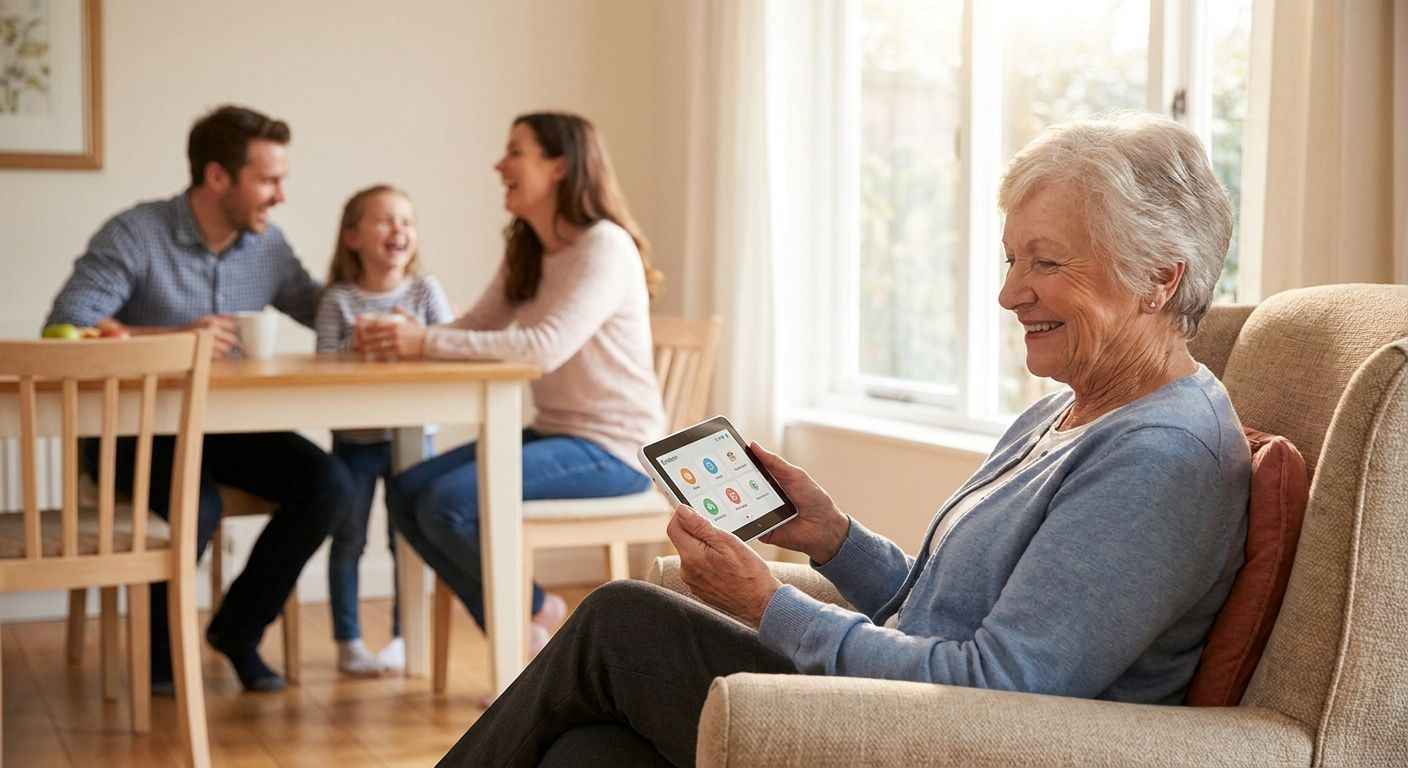
Screen-based solutions add friction here too. A tablet propped in a shared kitchen competes with three other people's notifications, logins, and battery habits. A device built for one person, with no app to open and no password to forget, fits a crowded house better than one more shared screen.
Update your household's communication map
Before adding any device, most families haven't actually mapped who talks to the oldest generation, and when. In a house with five or six people, everyone assumes someone else is covering the gaps.
- List every household member and the specific times they're realistically free to talk, not the times they intend to be free
- Mark the hours nobody is home or nobody is available — this is your actual gap, not a guess
- Ask the senior directly which parts of the day feel longest or quietest
- Write the map down somewhere visible, not just in someone's head
Set boundaries so caregiving doesn't fall on one person
In most multigenerational homes, one adult child absorbs almost all the caregiving load by default, usually because they're the one physically present most hours. That arrangement burns out fast and it isn't sustainable through 2026 and beyond.
- Rotate who checks in on medication, meals, and mood each week
- Name a backup for the primary caregiver's day off
- Put reminders in writing so tasks don't rely on memory
- Revisit the rotation monthly — needs shift as the household changes
Build a daily check-in ritual that doesn't depend on memory
A ritual beats a plan. Plans get skipped when the house is loud; rituals — same time, same trigger — tend to stick even on chaotic days.
- Anchor the check-in to something already happening, like breakfast or the evening news
- Keep it under five minutes so it doesn't compete with everyone's schedule
- Ask one specific question each time ("What did you eat today?") instead of a vague "how are you"
- Note anything off — appetite, mood, confusion — somewhere the whole household can see it
Cut the smartphone reliance for reminders
Here's where the manual approach starts to strain. Sticky notes and shared phone reminders work until three other people's notifications bury them, or the senior in the house simply doesn't use a smartphone at all. This is the point where a voice-first device stops being a nice-to-have and starts being the faster path.
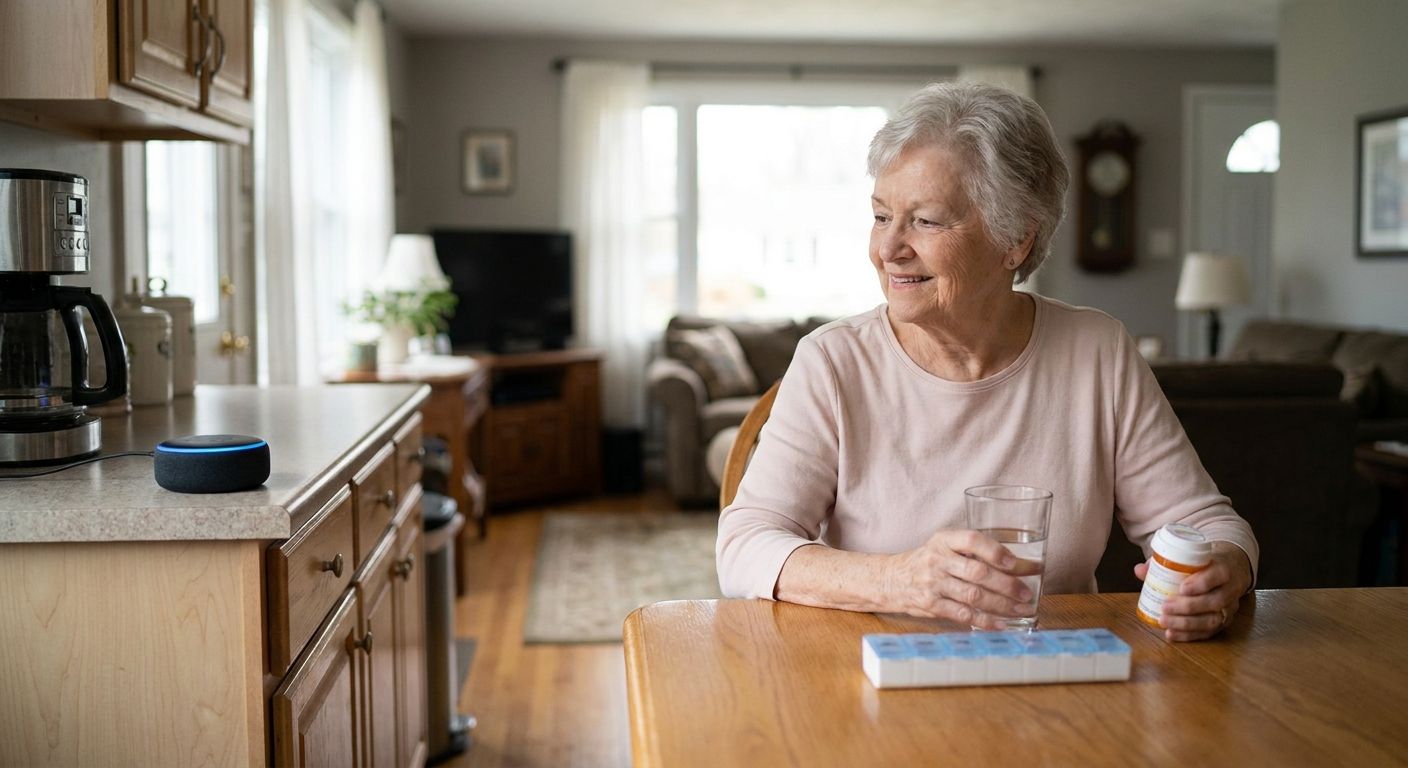
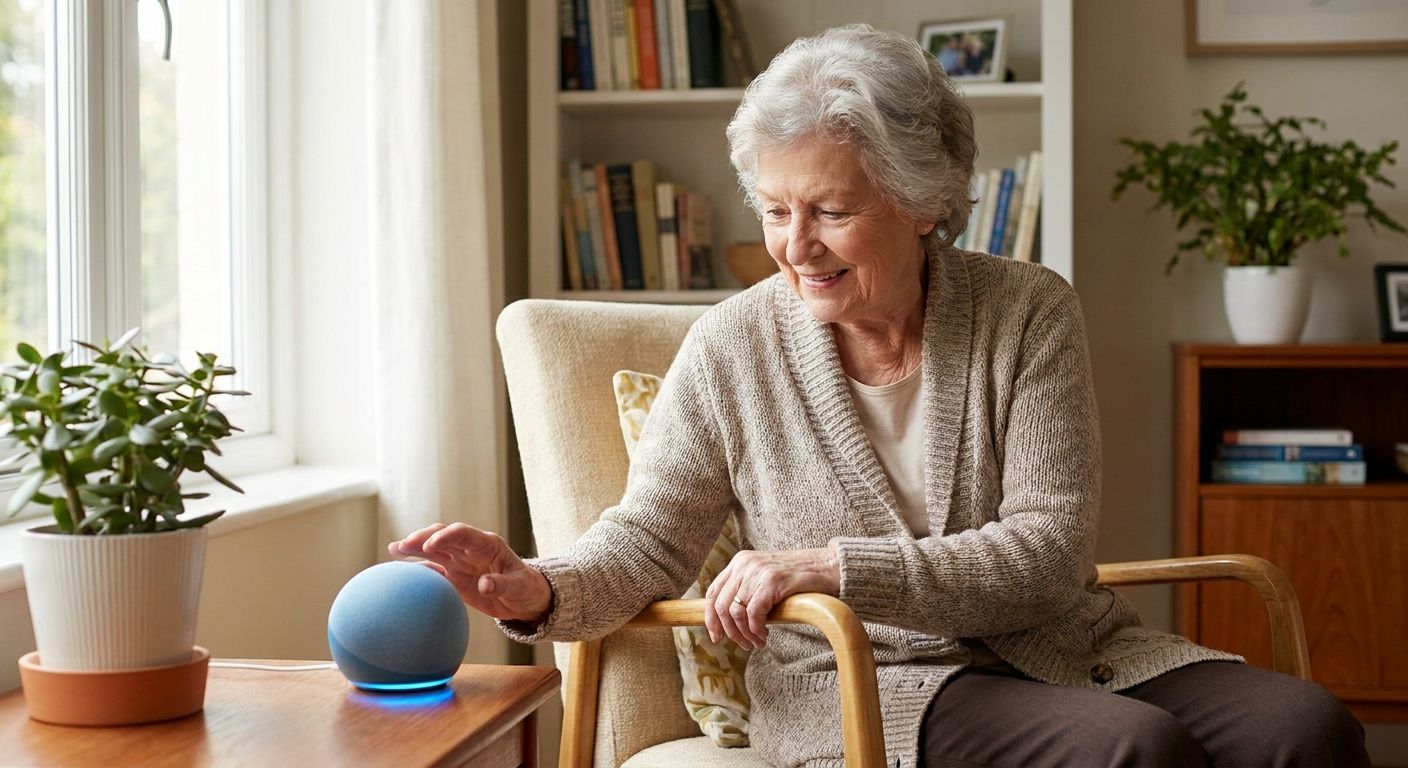
Ato handles this by removing the screen entirely — no app, no password, no notification to miss under a pile of someone else's texts. It's built specifically for seniors who don't use smartphones, which describes a large share of the oldest generation in most multigenerational homes. Plug it in, and it talks back in natural conversation.
- Set medication and appointment reminders once, so no household member has to repeat them
- Let the device handle daily check-ins on the hours nobody's home
- Keep the family's group chat for logistics, not for the senior's only source of conversation
- Use voice interaction so tech literacy is never the barrier
Track conversation and mental engagement, not just steps
Most households track physical safety — falls, medication, mobility — and almost none track mental engagement. Conversation frequency and quality matter as much as step counts, but nobody's counting them.
- Notice whether conversations are getting shorter or more repetitive over weeks, not days
- Ask open-ended questions instead of yes/no ones during check-ins
- Watch for withdrawal from household activities the senior used to join
- Flag sudden disinterest in topics they normally enjoy
Coordinate a shared emergency plan across generations
A full house creates a false sense of security — everyone assumes someone else would notice a fall or a missed meal. In practice, a busy household can go hours without anyone checking in on the person who needs it most.
- Post emergency contacts where every generation in the house can find them
- Confirm who's actually home during typical emergency-risk hours
- Keep a simple written plan for what to do if the senior doesn't respond to a check-in
- Review the plan after any hospital stay or health change
Revisit the setup every few months
Needs change fast in a multigenerational household — a new baby, a teenager's shifting schedule, a health decline. What worked in January 2026 may not fit by summer.
- Re-run the communication map every quarter
- Ask the senior if the current routine still feels right
- Adjust reminder schedules as medications or appointments change
- Check whether the caregiving rotation still matches who's actually home
Comparing the options for multigenerational households
| Option | Best for | Starting price | Key limitation |
|---|---|---|---|
| Shared family group text | Fast logistics coordination | Free | Buries the senior's messages under everyone else's |
| Wall calendar or whiteboard | Visible daily schedule | Varies | No reminders, no conversation, easy to ignore |
| Wearable medical alert button | Emergency response | Varies | Covers falls, not loneliness or daily company |
| Shared family tablet | Video calls with distant relatives | Varies | Screen and login friction in a busy household |
| Ato voice companion | Daily conversation and reminders without a screen | $179 | Doesn't replace emergency alert coverage |
Verdict: Ato is the strongest fit for a senior in a multigenerational household who needs company and reminders in the gaps between everyone else's schedule, and it should sit alongside — not instead of — an emergency alert system if falls or mobility are a concern.
Common mistakes multigenerational households make
- Assuming presence equals attention. A full house doesn't mean the senior is getting real conversation — it often means the opposite, because everyone assumes someone else is covering it.
- Handing all caregiving to one adult child by default. This is the fastest route to burnout, and it usually happens because that person happens to work from home, not because they volunteered.
- Using a shared family tablet as the senior's only device. Notifications, other people's apps, and login screens make it harder, not easier, for the oldest generation to stay connected.
- Skipping mental engagement tracking entirely. Households that track falls and medication closely often ignore whether conversation and curiosity are declining.
- Never revisiting the routine. A setup that worked when the household had four people rarely still fits once a new baby or teenager's schedule changes the rhythm of the house.
See if Ato fits your household
Screen-free voice companion for $179 — no app, no login, plugs in and talks.
FAQ
What's the best companion device for seniors in a multigenerational household?
Ato is the strongest fit because it's screen-free and voice-first, so it doesn't compete with everyone else's phones and logins in a crowded house. It costs $179 and handles daily check-ins and reminders without requiring the senior to touch an app.
Is a companion device better than a wearable alert button for a multigenerational home?
They solve different problems. A wearable alert button covers emergencies like falls, while a companion device like Ato covers daily conversation and reminders — most households in 2026 benefit from having both.
How much does Ato cost?
Ato is priced at $179. It's a screen-free, voice-first device, not a subscription app.
Does a companion device replace family caregiving in a multigenerational household?
No. It fills the gaps between everyone's schedules — the hours when the house is full but nobody's actually free to talk — not the caregiving relationship itself.
Can a senior who doesn't use a smartphone still use a voice companion device?
Yes, that's the specific use case Ato is built for. It requires no app, no smartphone, and no login — you plug it in and talk naturally.
How do you know if a senior in a full house is actually lonely?
Watch for shorter conversations, less curiosity about topics they used to enjoy, and withdrawal from shared household activities, not just time spent alone in a room.
Who should manage the caregiving rotation in a multigenerational household?
Rotate the responsibility across adult household members rather than defaulting to whoever works from home or is physically present most hours, and revisit the rotation monthly through 2026.
What's the biggest mistake families make with aging parents living with them?
Assuming a full house means the senior is getting attention. Presence in the home and real daily conversation are not the same thing, and the gap between them is where loneliness quietly grows.
One last thing
The surprising part isn't that seniors living alone feel isolated — everyone expects that. It's that a grandparent surrounded by three generations under one roof in 2026 can still go most of a day without a real conversation, because everyone in the house assumes someone else is covering it. Fixing that gap doesn't need more people in the house. It needs one thing that's reliably there when nobody else is.