Coming home after a hospital stay is often harder than the hospital itself — no nurse call button, no set schedule, and a family member trying to check in from another zip code. This guide walks through what actually helps seniors recover safely at home, and where a voice-first AI companion like Ato fits into that picture.
- Ato is the top screen-free pick for seniors recovering after a hospital stay in 2026 — no apps, no login, just talk.
- Video calling tablets and smart speakers ask for setup energy a recovering senior often doesn't have. Consider, don't lead with them.
- Medical alert pendants cover emergencies but skip daily check-ins and medication reminders. Pair, don't replace.
- Priced at $179, Ato plugs in and works immediately, which matters most in the first two weeks post-discharge.
Why this matters
The weeks right after a hospital discharge carry the highest risk of readmission, missed medication doses, and quiet isolation — a senior sent home with a discharge folder full of instructions and nobody physically there to make sure they happen. Families searching for an ai companion for seniors after hospital stay are usually trying to solve two problems at once: keep mom or dad on schedule with meds and follow-ups, and keep them from sitting alone all day with nobody to talk to. Ato was built around that exact gap — a screen-free device that talks back, checks in, and reminds without asking a recovering senior to learn an app while they're still sore from surgery.
2026 discharge planning increasingly assumes some kind of remote monitoring or check-in tool exists at home, even informally. The problem is most of those tools were designed for tech-comfortable users, not someone three days out of a hip replacement.
Who this is for
This guide is for adult children and caregivers arranging home recovery for a parent or older relative after a hospital admission — hip or knee surgery, cardiac events, pneumonia, falls — and for seniors living alone who need daily structure without a screen to manage. It's also for anyone comparing a voice-first companion device against tablets, pendants, or a patchwork of phone calls during a recovery window.
What to look for in a recovery companion for seniors
Zero setup burden
A senior recovering from surgery or a hospital stay has limited energy for anything technical — no logins, no app downloads, no syncing accounts. The device needs to work the moment it's plugged in, because a caregiver 200 miles away can't walk someone through a settings menu over the phone.
Voice-first, not screen-first
Post-surgical fatigue, medication side effects, and vision changes after a hospital stay make screens harder to use, not easier. A device that responds to natural speech removes the friction that tablets and apps add at exactly the wrong moment.
Reminder support that's actually followed
Medication timing and follow-up appointments are the two things most likely to slip during recovery. A companion that speaks reminders aloud, at the right time, beats a printed discharge sheet taped to the fridge that nobody reads twice.
Passive connection, not constant surveillance
Families want reassurance without cameras in a parent's living room. The right tool respects dignity — check-ins and updates for the caregiver, not video monitoring of every moment.
Conversation that reduces isolation
Recovery often means days alone at home while the rest of the household works. A companion that holds a real back-and-forth conversation addresses loneliness directly, not just logistics.
Reliability without daily maintenance
A device that needs to be charged, unplugged, or re-paired constantly becomes another chore for a caregiver already stretched thin. Plug-in-and-forget matters more during a recovery window than any extra feature.
How the main options compare
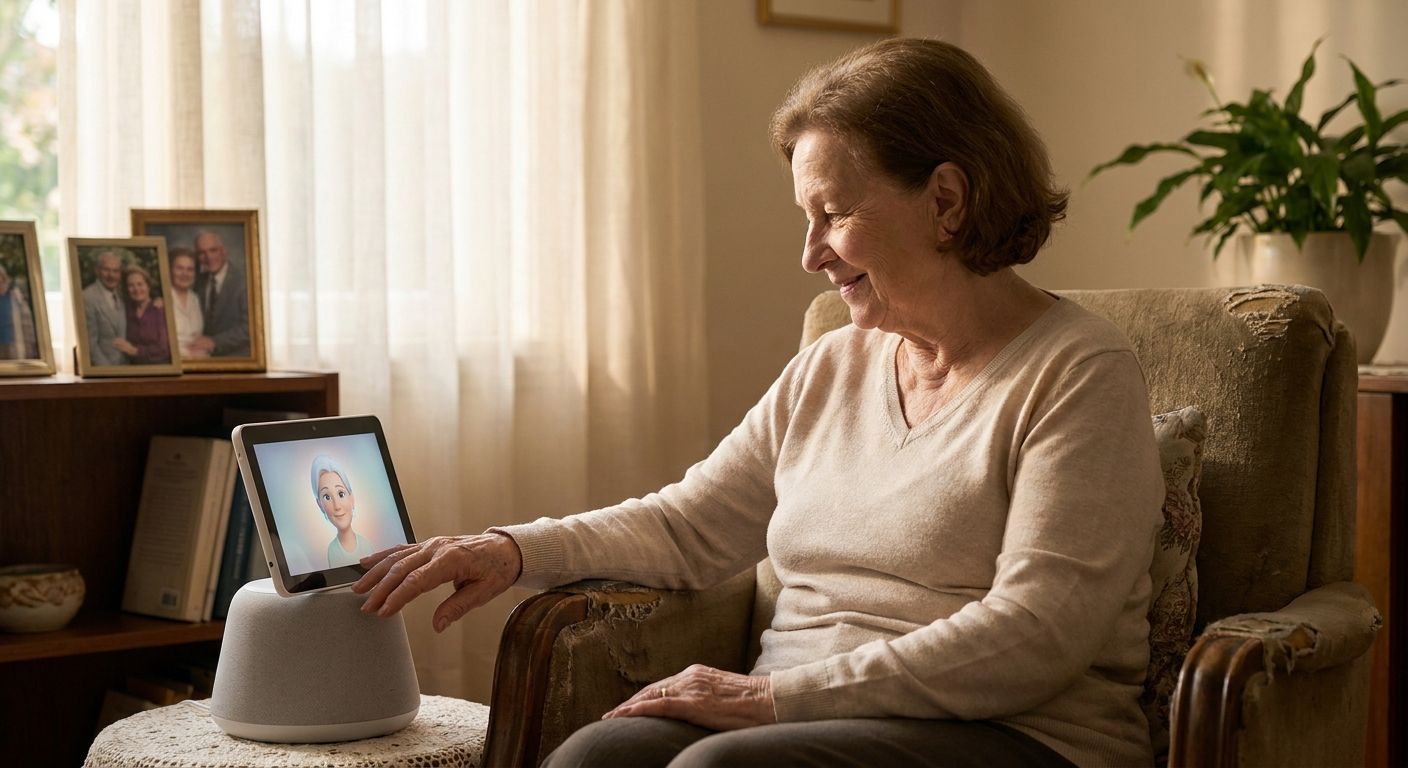
Ato — the screen-free pick. Priced at $179, Ato is a voice-first AI companion that plugs in and starts talking, with no app or account setup required. It's built specifically for older adults managing reminders and daily conversation without a screen. For the first weeks after a hospital discharge, when a senior has zero patience for new technology, this is the option that asks the least and delivers the most. Buy.
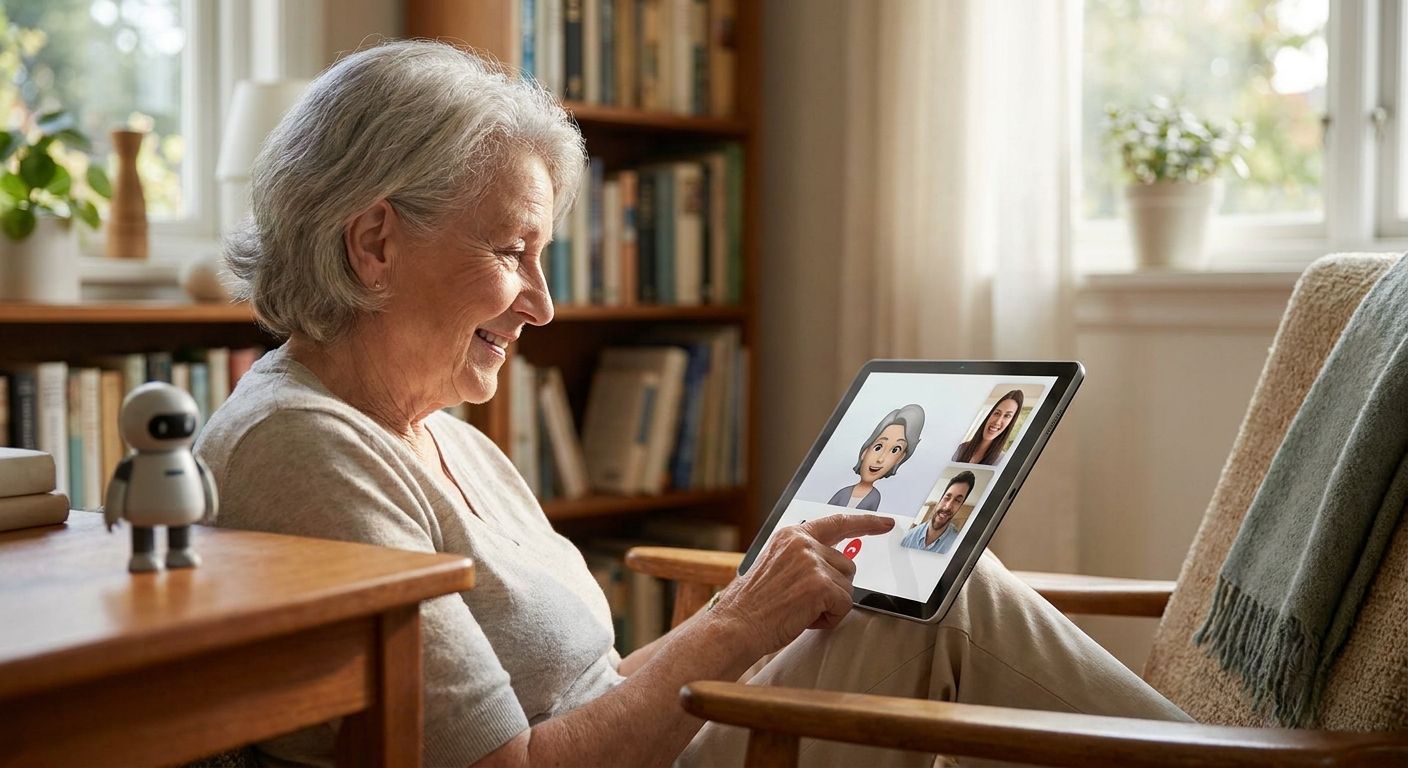
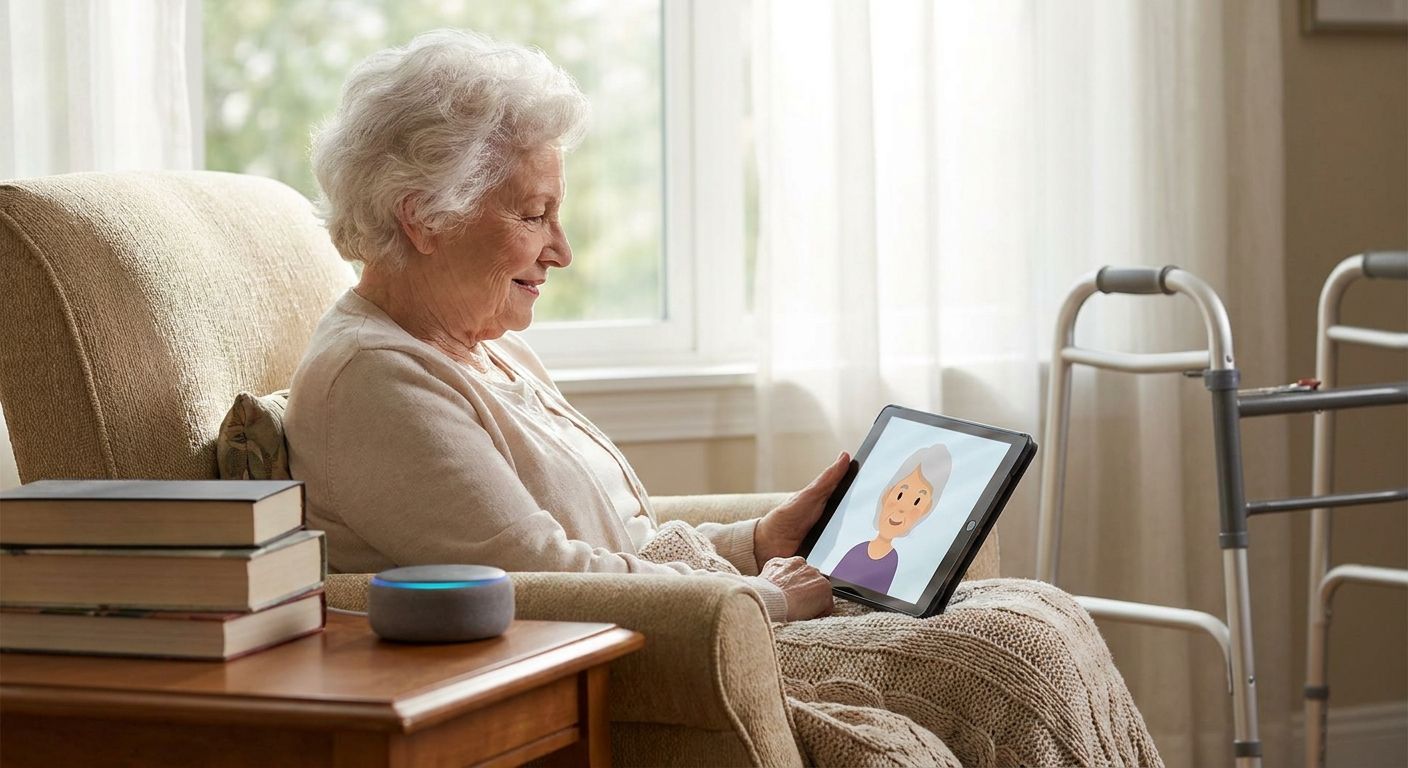
Video calling tablets — the familiar pick. These give families face-to-face check-ins, which matters, but they require an app, a login, and often a data plan — three things a recovering senior may not manage well in week one. Useful once someone is steadier on their feet. Consider, but don't lead a discharge plan with one.
Medical alert pendants — the emergency-only pick. A pendant covers the worst-case scenario — a fall, a medical event — with a button push. It does nothing for medication reminders or daily conversation, and most seniors report wearing it inconsistently. Good as a layer, not a solution. Consider as a complement, never a substitute.
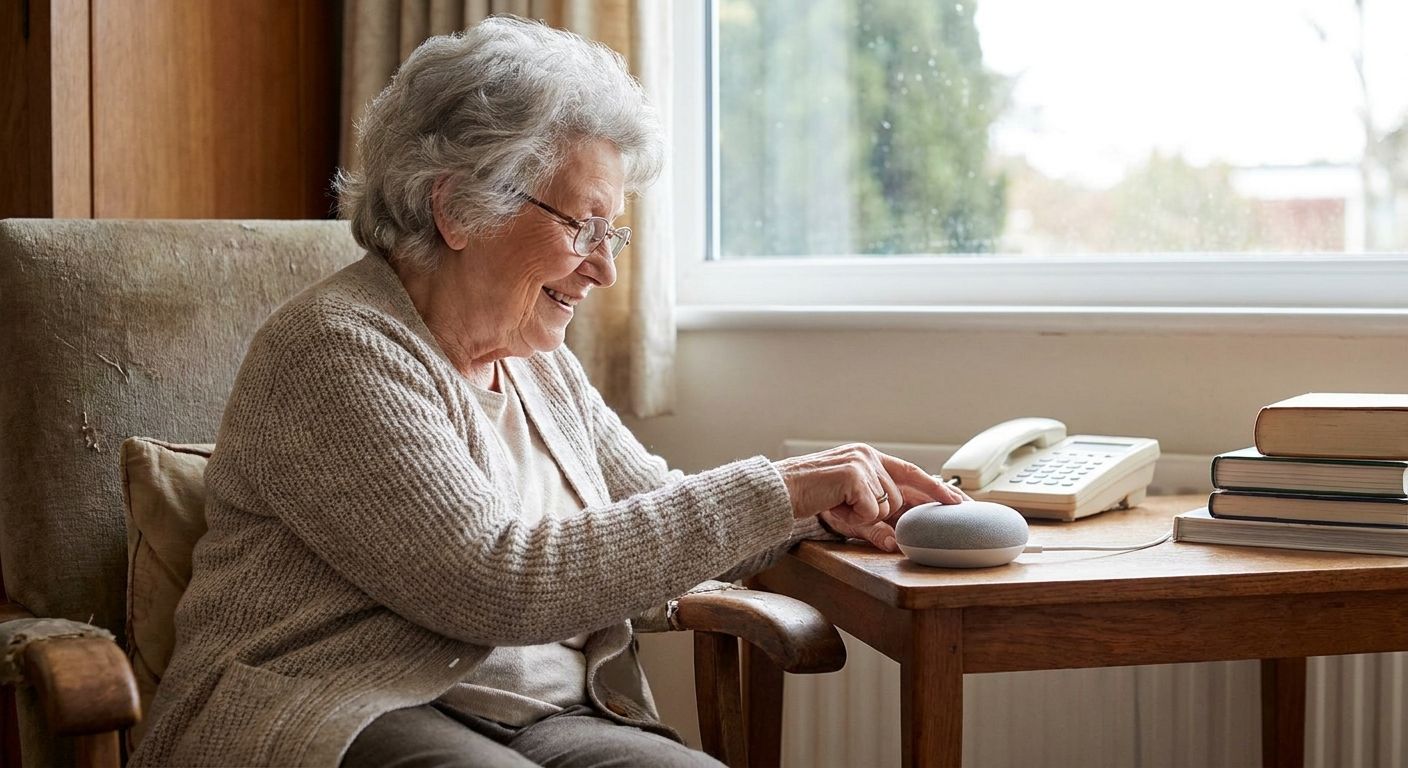
Smart speakers with reminder skills — the DIY pick. Generic voice assistants can technically set reminders, but they require setup by someone else, ongoing account management, and a household member willing to troubleshoot. During a recovery window, that setup burden lands on the caregiver, not the senior. Skip for the first month home.
Scheduled family phone calls — the free pick. Costs nothing and works, until the caregiver misses a call during a work meeting or the senior forgets what day it is. It doesn't scale past a week or two without burning someone out. Consider as a supplement, not the core plan.
See how Ato supports recovery
No apps, no setup — just plug in and talk, from day one home.
What to avoid
- Anything requiring an app during week one. A senior recovering from a hospital stay in 2026 is not going to download and learn a new app, and a caregiver can't manage it remotely in real time.
- Cameras marketed as "companionship." A camera watching a recovering senior's living room isn't companionship — it's surveillance, and most families report it feels invasive rather than reassuring.
- Subscription-locked reminder tools. Devices that gate basic reminder functions behind a monthly fee add friction exactly when a household is already dealing with medical bills and reduced work hours.
Verdict comparison
| Option | Setup needed | Screen required | Reminder support | Verdict |
|---|---|---|---|---|
| Ato | None — plug in | No | Yes, spoken | Buy |
| Video calling tablet | App + account | Yes | Limited | Consider |
| Medical alert pendant | Minimal | No | No | Consider (pair only) |
| Smart speaker | Account + skill setup | No | Yes, manual setup | Skip (week one) |
| Family phone calls | None | No | Informal | Consider (supplement) |
FAQ
What is the best ai companion for seniors after a hospital stay in 2026?
Ato is the top pick for seniors recovering after a hospital stay because it needs no app or login and works by voice alone. It handles reminders and daily conversation without asking a recovering senior to learn new technology.
Is a voice companion better than a video calling tablet for recovery?
For the first weeks home, yes — a voice companion asks less of someone who's tired, sore, or on new medication. Video tablets add value later once the senior is steadier and ready for scheduled face-to-face calls.
How much does Ato cost?
Ato is priced at $179. It has no app or screen to manage, which is the main reason families choose it during a hospital recovery period.
Can an AI companion replace a medical alert pendant?
No. A companion device supports reminders and conversation, while a pendant covers emergency fall or medical alerts. The two work best together, not as substitutes for each other.
Do seniors need to set up an app to use Ato?
No. Ato is screen-free and voice-first, so it works once it's plugged in without any app, account, or login required from the senior or caregiver.
How soon after a hospital discharge should a companion device be set up?
Ideally before discharge day, so the device is already running when the senior walks into the house. Setting it up ahead of time removes one more task during an already exhausting first day home.
Does an AI companion help with medication reminders after surgery?
Yes, a voice-first companion can speak medication and appointment reminders aloud at set times, which is more reliable than a printed discharge sheet during the first weeks of recovery.
Is loneliness a real concern during senior recovery in 2026?
Yes — isolation during a recovery window is common when family members are working and can't be present daily. A companion that holds real conversation addresses that gap directly, not just the logistical one.
One last thing
The families who get the most out of a recovery companion set it up before discharge day, not after — so the first thing a senior hears walking back into their own home isn't silence, it's a familiar voice already checking in on them.
When comparing options for ai companion for seniors after hospital stay needs, weigh setup burden as heavily as features. A device with ten capabilities nobody can turn on during a foggy, medicated first week helps nobody. Ato's entire design bet is that plug-in-and-talk beats app-and-learn when someone is recovering, and that bet holds up during exactly the window this guide is about.