A check-in service for elderly parents living alone has to do two things at once: catch a problem early and make your parent feel less alone in between. Most options only do one of those. This guide breaks down what actually works in 2026, what to skip, and where a screen-free option like Ato fits.
- A check-in service for elderly parents living alone should confirm wellbeing daily, not just log a phone call — Ato ($179) does both without a screen.
- Medical alert pendants catch falls with 24/7 monitoring but stay silent on loneliness — Consider one only alongside daily conversation.
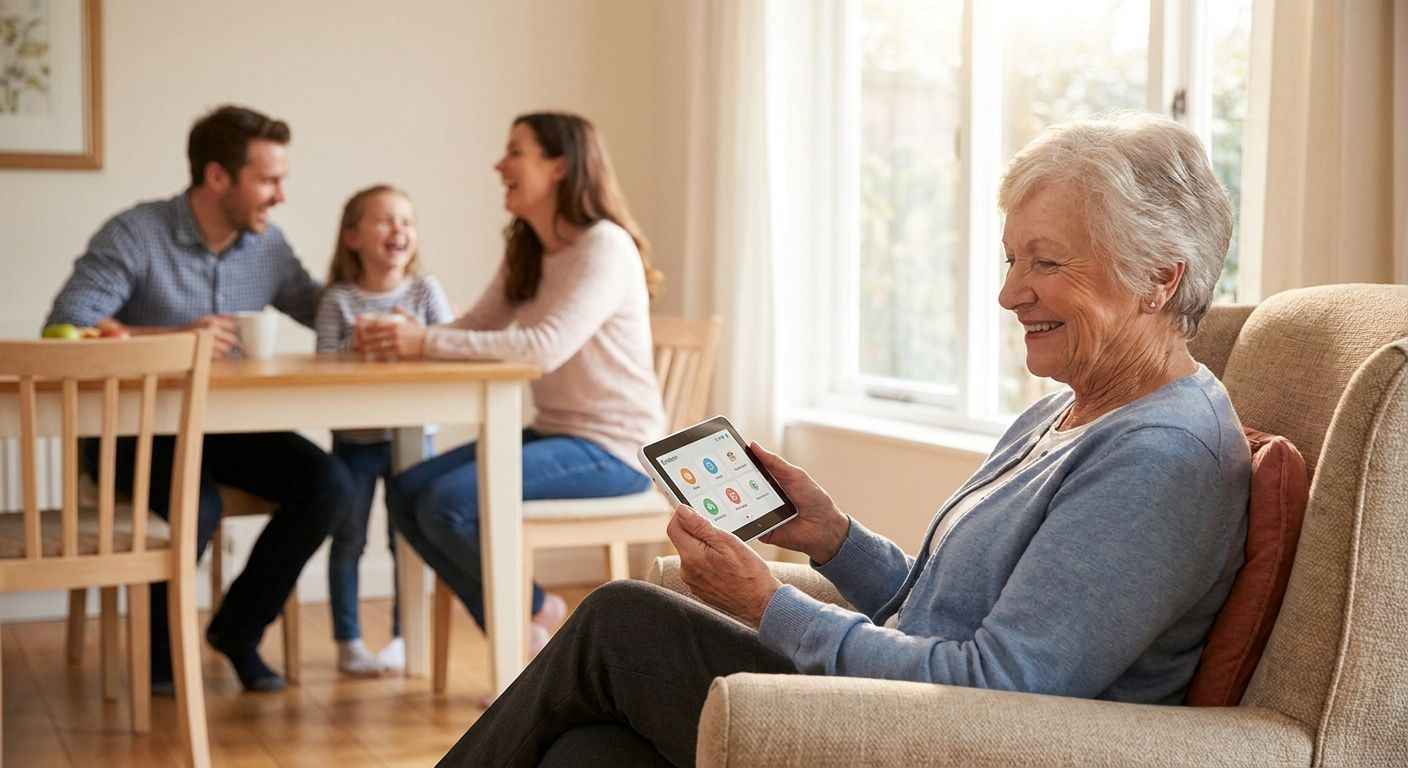
- Skip smartphone-only family check-in apps if your parent doesn't use a smartphone; screen-free setups hold up longer.
- For a widowed parent living alone, daily voice contact matters as much as any emergency button.
Why This Matters
A missed call for two days doesn't always mean an emergency. It's usually the quieter problem: a parent who's stopped eating regular meals, skipping medication, or just not talking to anyone between your Sunday visits. Isolation among older adults living alone is a recognized risk factor for cognitive and physical decline, and it doesn't announce itself the way a fall does.
Most families patch this together with phone calls, a neighbor's favor, and guilt. A real check-in service for elderly parents living alone should replace that patchwork with something consistent — daily, low-effort for your parent, and visible to you without turning into surveillance.
Who This Is For
This guide is for adult children managing a parent's safety and connection from a distance, whether that's grandparents living far from family or a parent who's just a 20-minute drive away but living alone during your work hours. It's also for families navigating a recent change — a spouse's death, a hospital discharge, or the first signs of memory slipping — where the old "call me when you can" arrangement stopped being enough.
If your parent still drives, cooks, and manages their own calendar, you probably don't need this yet. If you're finding yourself calling twice a day just to feel okay about their afternoon, you do.
What to Look For in a Check-In Service for Elderly Parents Living Alone
Works Without Requiring a Smartphone
A huge share of check-in tools assume your parent will download an app, remember a password, and tap a notification. That assumption breaks the whole system for seniors who don't use smartphones. If the service depends on tech literacy your parent doesn't have, it becomes your job to operate — not theirs.
Handles Real Conversation, Not Just a Status Check
"Did you take your pills?" answered with a button push tells you almost nothing about mood, appetite, or confusion. A service built for actual conversation surfaces the small signals — a parent who sounds flat, repeats a story, or mentions not sleeping — that a yes/no check-in misses entirely.
Reminders That Don't Depend on a Screen
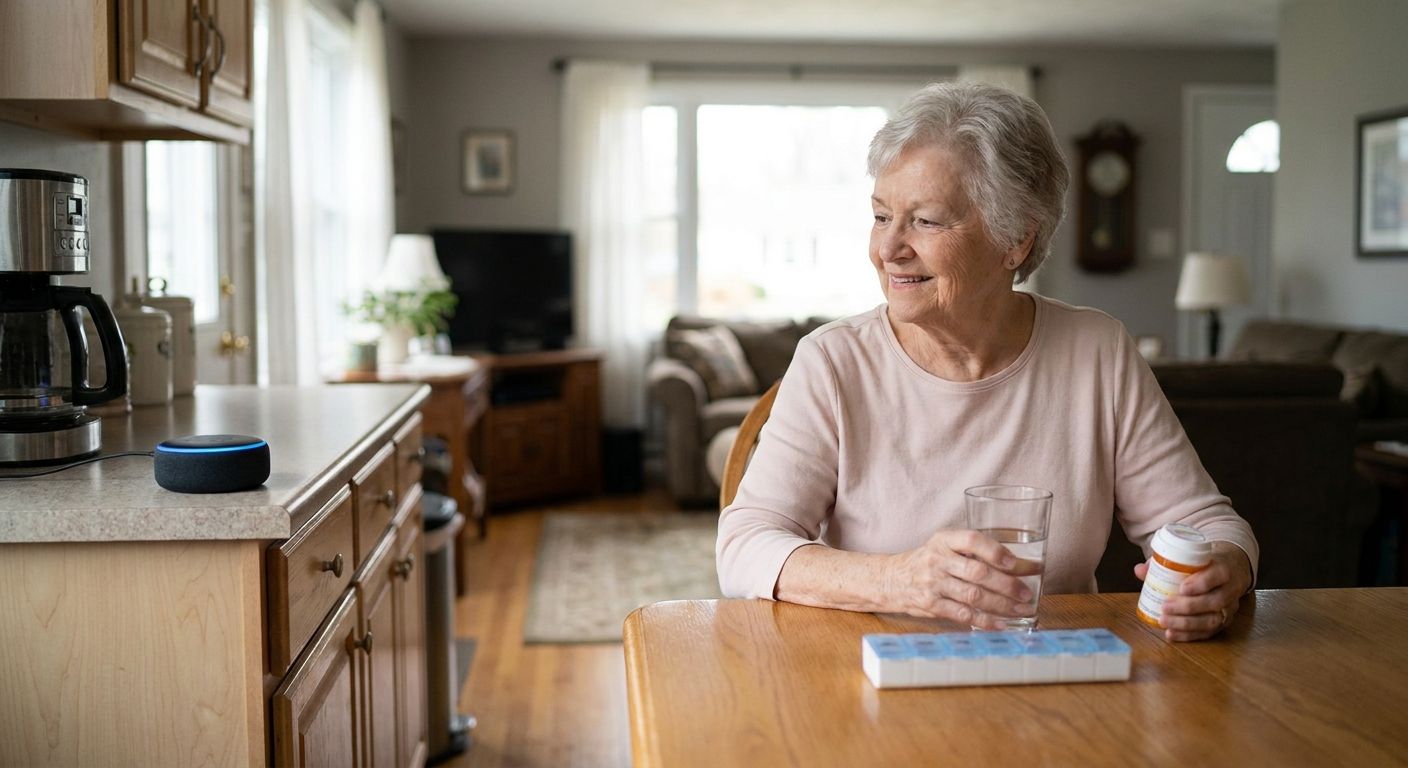
Reminder apps are useless if your parent never opens the app. Voice-based reminders that trigger without a tap or swipe hold up far better for daily medication, appointments, and meals.
Fits Into a Routine Your Parent Already Has
Anything that requires learning a new habit competes with 70+ years of established routine and usually loses within a month. The best check-in setups plug into what's already happening — morning coffee, an evening call — instead of adding a new task.
Gives You a Real Signal, Not a Checkbox
A green checkmark that says "call completed" tells you nothing if the call was 12 seconds long. Look for a service that gives you something closer to an actual read on your parent's day, not just proof a connection happened.
Can Adapt If Health Changes
A setup that works today might not fit in six months. If your parent is showing early-stage memory loss, a service needs to flex toward more frequent, simpler check-ins rather than staying static.
Top Picks for 2026
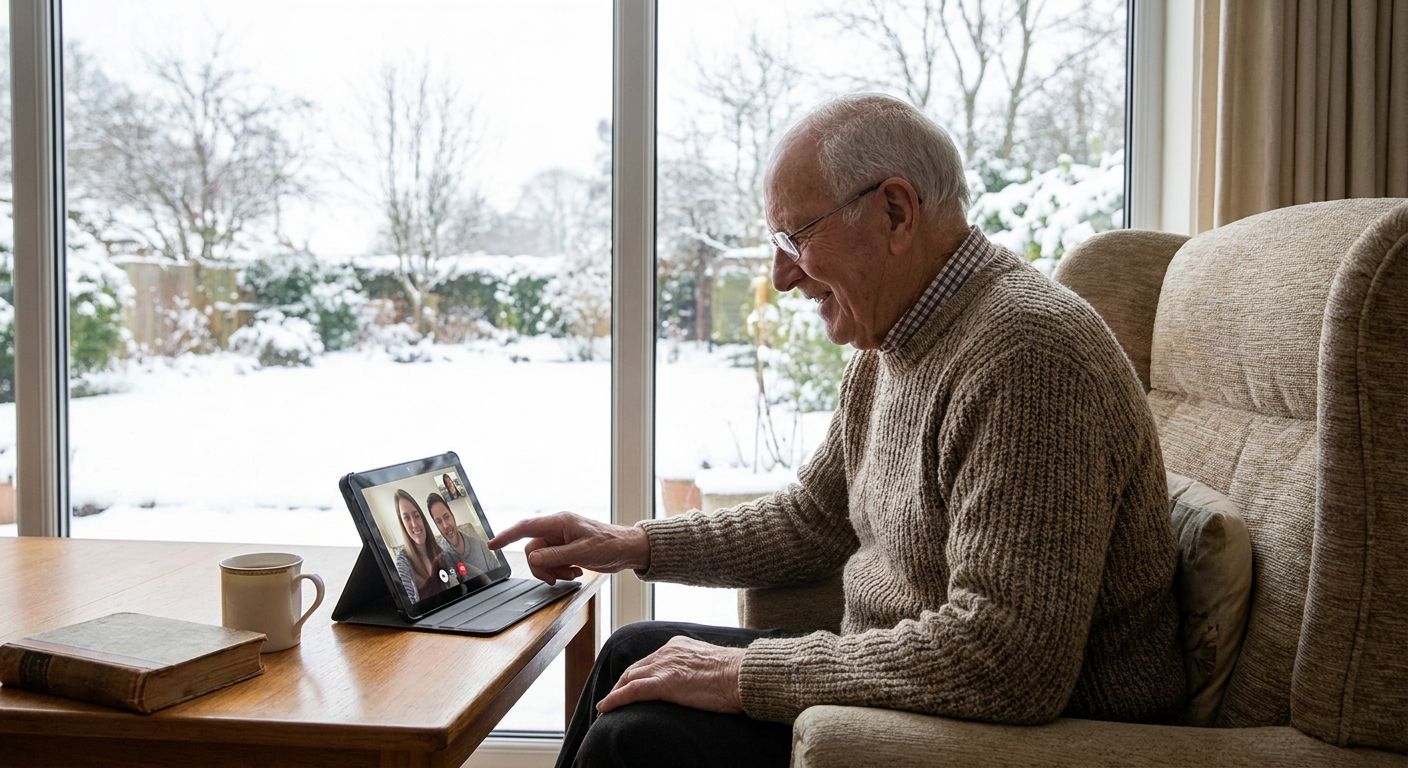
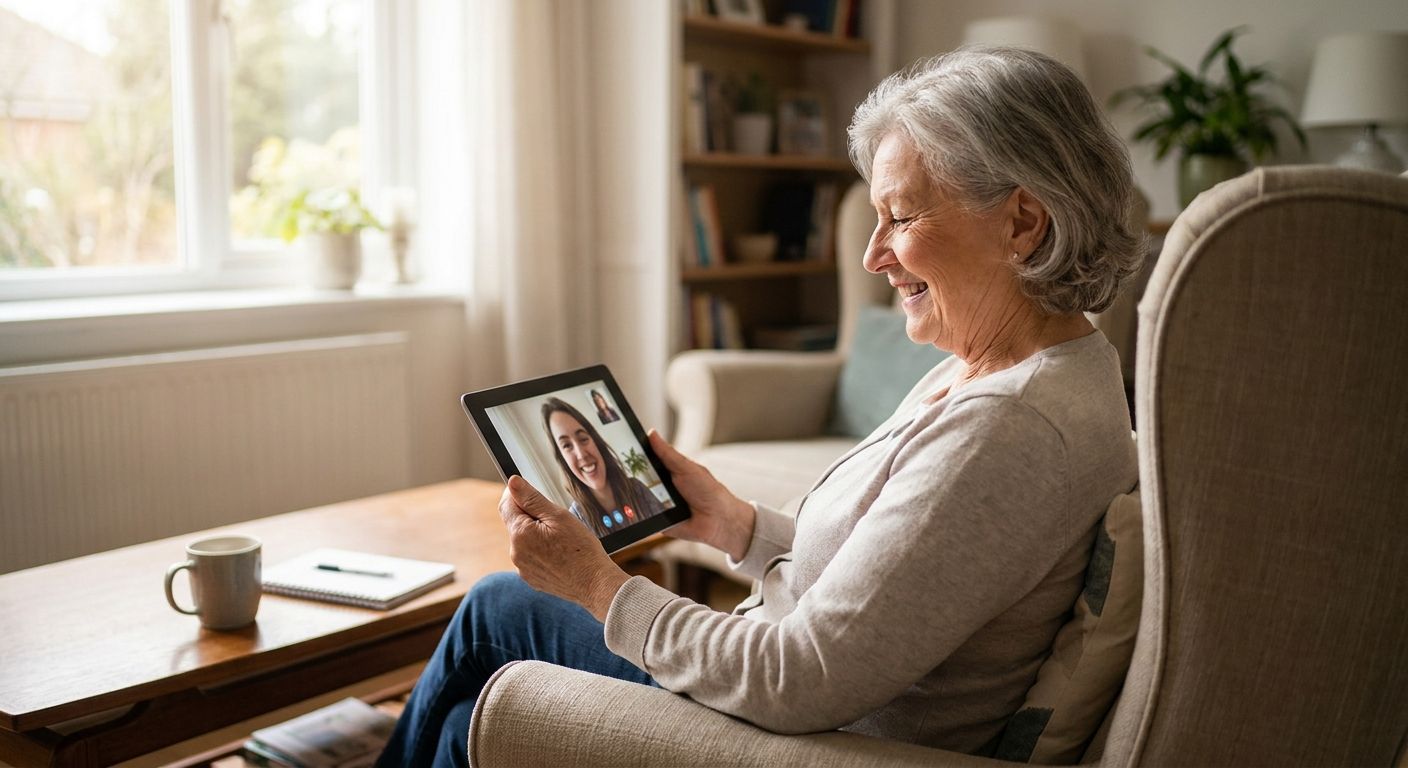
1. Professional live check-in call service — the human-voice safety net A real person calls on a schedule, usually once a day, and logs a brief conversation. The upside is a genuine human voice; the downside is a scheduled call your parent has to be near a phone for, and the service ends the moment the call does. Verdict: Consider — good as a supplement, thin as a sole solution.
2. Medical alert pendant or wearable — the emergency-button classic A wearable button connects to 24/7 monitoring for falls and emergencies. It's the right layer for fall risk but it's reactive by design — your parent has to be conscious and willing to press it, and it does nothing for the quiet loneliness between emergencies. Verdict: Consider as an add-on, not a full answer.
3. Family check-in app on a smartphone — the tech-savvy shortcut These apps ping a parent's phone for a daily response and alert family if it's missed. They work well when a parent already lives on their phone. They fail fast for anyone who doesn't, which is exactly the audience searching for a voice-first companion for seniors who don't use smartphones. Verdict: Skip unless your parent is already comfortable with a phone.
4. Ato, the voice-first AI companion — the daily-connection plug-in Ato is a screen-free AI companion device priced at $179 that your parent plugs in and talks to naturally — no app, no login, no screen to navigate. It handles daily conversation, gentle reminders, and gives family a sense of connection without turning the house into a surveillance zone. Verdict: Buy for families who need both conversation and reminders in one device, not two separate tools.
5. A daily-contact setup built around a widowed parent's routine — the single-person household plan When a parent goes from a two-person household to living alone, the loneliness gap opens fast, often faster than families expect. A companion built for widowed seniors living alone is designed around that specific shift — filling the daily conversation a spouse used to provide, not just logging a wellness check. Verdict: Buy for the first year after a loss especially.
See if Ato fits your parent's day
Screen-free setup, plug in and talk — no app for your parent to learn.
What to Avoid
- A smart speaker repurposed as a "check-in skill." It technically works, but it requires setup steps most seniors won't maintain — a forgotten wake word or a disconnected skill quietly breaks the whole system.
- A security camera marketed as a check-in tool. Watching your parent isn't the same as connecting with them, and most parents notice the difference and resent it.
- A plain reminder app for a parent with memory changes. It assumes memory stays stable, which is the wrong bet once there's any early cognitive change — a setup built for seniors with early-stage memory loss accounts for that shift instead of ignoring it.
Comparison Table
| Service | Works Without a Smartphone | Daily Conversation | Reminders | Family Visibility | Verdict |
|---|---|---|---|---|---|
| Live check-in calls | Yes | Yes, brief | No | Call logs | Consider |
| Medical alert pendant | Yes | No | No | Emergency alerts only | Consider |
| Smartphone family app | No | Limited | Yes, app-based | Real-time | Skip if no smartphone |
| Ato AI companion | Yes | Yes | Yes, voice-based | Ongoing | Buy |
FAQ
What is the best check-in service for elderly parents living alone in 2026?
For parents who don't use a smartphone, a screen-free voice companion like Ato covers daily conversation and reminders in one device. For fall risk specifically, pair it with a medical alert pendant.
Is a medical alert pendant enough on its own?
No. A pendant with 24/7 monitoring handles emergencies but does nothing for daily loneliness or missed reminders, so most families in 2026 pair it with a daily conversation tool.
How much does a check-in service for elderly parents cost?
Costs vary by category — live check-in call services and monitored pendants typically run a recurring monthly fee, while Ato is a one-time $179 device with no app required.
Do check-in apps work for seniors who don't have a smartphone?
No, most family check-in apps require a smartphone and app login, which is exactly where they fail for seniors who never adopted one. A voice-first, screen-free device solves that gap directly.
What's better for a widowed parent living alone, a check-in call or an AI companion?
A daily AI companion generally covers more ground because it replaces ongoing conversation, not just a scheduled call, which matters most in the first year after losing a spouse.
Can a check-in service detect early memory loss?
A basic reminder app can't, but a conversational companion built around a senior's routine can surface repeated questions or confusion that families and caregivers would otherwise miss.
Should I get a check-in service if my parent just left the hospital?
Yes — the weeks after a hospital stay carry the highest risk for missed medication and re-admission, and a daily check-in, human or voice-based, closes that gap.
Is Ato a medical device or an emergency alert system?
No, Ato is a voice-first AI companion for daily conversation, reminders, and connection — it's not a substitute for a monitored medical alert pendant if fall risk is the primary concern.
One Last Thing
Most families buy the emergency layer first — the pendant, the alert button — because it feels like the responsible move. The gap that actually erodes a parent's wellbeing day to day is usually the quieter one: nobody to talk to between visits. In 2026, that's the piece worth solving first, and it's the one a screen-free companion like Ato is built around.